" height="12.698492857142854px" id="pWAvKPcms" transform="translate(24.481 2.78)" width="11.37337500000001px"/><path d="M 2.582 12.233 L 0.023 12.233 L 3.931 6.093 L 0 0 L 2.628 0 L 5.466 4.558 L 5.629 4.558 L 8.373 0 L 10.978 0 L 7.163 6.024 L 11.118 12.233 L 8.489 12.233 L 5.629 7.582 L 5.466 7.582 Z" fill="rgb(0, 0, 0)" height="12.233348214285716px" id="g6sdimayU" transform="translate(35.839 3.013)" width="11.117553571428587px"/><path d="M 0 8.954 C 0 6.559 1.675 5.163 4.442 5.163 L 8.001 5.163 L 8.001 4.279 C 8.001 2.698 7.163 1.907 5.489 1.907 C 3.838 1.907 2.691 2.698 2.621 4 L 0.249 4 C 0.412 1.465 2.558 0 5.605 0 C 7.187 0 8.466 0.488 9.117 1.14 C 10.164 2.14 10.397 3.489 10.397 4.326 L 10.397 10.722 L 12.118 10.722 L 12.118 12.466 L 9.908 12.466 C 8.699 12.466 8.233 12.001 8.164 11.07 L 8.14 10.489 L 7.978 10.489 C 7.443 11.815 5.861 12.698 3.907 12.698 C 1.489 12.698 0 11.21 0 8.954 Z M 2.442 8.442 L 2.442 9.094 C 2.442 10.21 3.256 10.791 4.582 10.791 C 6.698 10.791 8.001 9.442 8.001 7.396 L 8.001 6.814 L 4.745 6.814 C 3.279 6.814 2.442 7.442 2.442 8.442 Z" fill="rgb(0, 0, 0)" height="12.698492857142854px" id="RkfsiKLT6" transform="translate(47.166 2.78)" width="12.117625000000032px"/><path d="M 2.395 12.466 L 0 12.466 L 0 0.233 L 2.093 0.233 L 2.419 2.512 L 2.582 2.512 C 3.326 0.93 4.838 0 6.675 0 C 9.373 0 10.908 1.93 10.908 5 L 10.908 12.466 L 8.489 12.466 L 8.489 5.233 C 8.489 3.14 7.582 2.093 5.768 2.093 C 3.721 2.093 2.395 3.698 2.395 6.047 Z" fill="rgb(0, 0, 0)" height="12.46590892857143px" id="XtfkA27wM" transform="translate(60.285 2.78)" width="10.908160714285714px"/><path d="M 7.582 4.892 L 4.582 4.892 L 4.582 12.706 C 4.582 13.049 4.859 13.326 5.202 13.326 L 7.737 13.326 L 7.737 15.28 L 5 15.28 C 3.459 15.28 2.21 14.031 2.21 12.489 C 2.21 9.957 2.21 7.424 2.21 4.892 L 0 4.892 L 0 4.214 L 3.861 0 L 4.582 0 L 4.582 2.892 L 7.582 2.892 Z" fill="rgb(0, 0, 0)" height="15.280048480357147px" id="PfiFRxM7z" transform="translate(71.548 -0.034)" width="7.7370892857142906px"/><path d="M 0 6.326 C 0 2.349 2.233 0 5.791 0 C 7.466 0 8.815 0.488 9.815 1.488 C 10.815 2.489 11.327 3.837 11.327 5.558 C 11.327 5.907 11.304 6.349 11.234 6.884 L 2.465 6.884 L 2.465 7.559 C 2.465 9.489 3.814 10.791 5.838 10.791 C 7.443 10.791 8.629 9.977 9.001 8.745 L 11.373 8.745 C 10.885 11.14 8.698 12.698 5.814 12.698 C 2.186 12.698 0 10.233 0 6.326 Z M 2.465 4.884 L 2.465 5.163 L 8.908 5.163 L 8.908 4.768 C 8.908 3.07 7.652 1.907 5.768 1.907 C 3.814 1.907 2.465 3.116 2.465 4.884 Z" fill="rgb(0, 0, 0)" height="12.698492857142854px" id="ovUjQiyZF" transform="translate(79.524 2.78)" width="11.373142857142966px"/><path d="M 2.173 1.354 L 2.173 4.42 L 0 3.1 L 0 0 Z" fill="rgb(0, 0, 0)" height="4.419814285714288px" id="tWmMiytls" transform="translate(0 13.473)" width="2.173272678571425px"/><path d="M 7.655 3.331 L 5.357 4.761 L 0 1.433 L 2.303 0 Z" fill="rgb(0, 0, 0)" height="4.761226785714285px" id="kLzzmZzJg" transform="translate(9.732 13.132)" width="7.655212499999994px"/><path d="M 8.707 2.922 L 5.956 4.607 L 0.373 8.049 L 0 8.269 L 0 5.345 L 5.956 1.681 L 8.707 0 Z" fill="rgb(0, 0, 0)" height="8.26918392857143px" id="v3QOXFlrf" transform="translate(2.977 9.604)" width="8.707400000000002px"/><path d="M 5.373 3.316 L 5.373 6.253 L 0 2.922 L 0 0 Z" fill="rgb(0, 0, 0)" height="6.252860714285717px" id="FV7s92ZT6" transform="translate(12.491 9.604)" width="5.373294642857147px"/><path d="M 17.136 1.447 L 2.316 10.635 L 0 9.188 L 14.819 0 Z" fill="rgb(0, 0, 0)" height="10.634580357142857px" id="j6zjgACPn" transform="translate(0.365 3.602)" width="17.135571607142857px"/><path d="M 5.373 3.331 L 5.373 6.253 L 0 2.937 L 0 0 Z" fill="rgb(0, 0, 0)" height="6.252872321428573px" id="W2p2uHbIb" transform="translate(0.001 1.982)" width="5.3732883587500035px"/><path d="M 8.707 2.924 L 2.751 6.588 L 0 8.269 L 0 5.347 L 2.751 3.662 L 8.334 0.22 L 8.707 0 Z" fill="rgb(0, 0, 0)" height="8.269196928571429px" id="CqyfVFwrq" transform="translate(6.181 -0.034)" width="8.707423214285711px"/><path d="M 7.655 3.328 L 5.352 4.761 L 0 1.43 L 2.298 0 Z" fill="rgb(0, 0, 0)" height="4.761226785714285px" id="d0QDPbszF" transform="translate(0.478 -0.055)" width="7.655196249999998px"/><path d="M 2.173 1.319 L 2.173 4.42 L 0 3.066 L 0 0 Z" fill="rgb(0, 0, 0)" height="4.419814285714286px" id="c45_x6jGd" transform="translate(15.692 -0.055)" width="2.173275000000004px"/></svg>)
When Software Becomes a Teammate
AI agents are shifting finance software from passive tools to active teammates, unlocking new efficiencies in complex areas like AR and collections.

Mario Santanilla
Design Engineer

Table of contents
Share
As a design engineer, I’ve spent most of my career improving workflows inside traditional software. The work was familiar: reduce clicks, clarify dashboards, simplify navigation, eliminate friction. Software was a tool. The user was the operator.
AI agents fundamentally change that relationship.
They don’t just make workflows faster — they participate in them. And that shift forces us to rethink how we design systems, especially in structured, high-stakes domains like finance and operations.
From Interfaces to Collaboration
Traditional SaaS products are built around explicit actions. A user logs in, runs a report, sends a reminder, reconciles a payment. Every step is initiated and completed by a human.
AI agents introduce a collaborative layer. Instead of driving every task, users define intent and boundaries. The agent evaluates context, makes decisions within guardrails, and executes across systems.
From a design perspective, this is a different category of problem. We’re no longer just designing screens. We’re designing working relationships between humans and autonomous systems.
That raises new challenges. How does the system communicate what it’s doing? How does a user intervene? When should the agent act independently, and when should it ask for confirmation?
Designing for agents is less about layout and more about trust.
Learning a New Interaction Model
The hardest part isn’t technical — it’s behavioral.
Finance teams, especially in areas like accounts receivable and collections, are used to deterministic systems. If an invoice is 30 days late, it triggers a specific action. Rules are explicit and predictable.
AI agents operate differently. They weigh signals, detect patterns, and act with probabilities rather than fixed conditions.
That means users must shift from managing every step to supervising outcomes. Instead of configuring dozens of rigid rules, they set policies and thresholds. Instead of executing each task, they review exceptions and edge cases.
As designers, we have to make that mental model intuitive. If an agent escalates a collections account early, the reasoning should be visible in plain language — payment history, contract terms, dispute frequency. Transparency isn’t a feature; it’s the foundation for adoption.
Unlocking Efficiency in AR and Collections
What excites me most is where this model unlocks efficiency that wasn’t previously possible.
Accounts receivable and collections are filled with repetitive but context-heavy work. Matching payments that lack invoice references. Interpreting contract terms before sending reminders. Deciding which overdue accounts to prioritize. Routing disputes across teams.
Historically, these tasks resisted full automation because they required interpretation. Static rules weren’t enough.
AI agents make that interpretation layer viable. They can analyze payment behavior, invoice anomalies, and contractual context to decide what to do next — whether that’s drafting a tailored follow-up, reconciling a transaction, or flagging an account as high risk.
For the first time, automation in finance doesn’t have to mean rigid workflows. It can mean adaptive decision-making at scale.
Designing for Control and Confidence
Of course, efficiency is only half the equation. In finance, errors have real consequences.
So the role of design becomes balancing autonomy with control. Agents need room to act, but users need clear visibility into what happened, why it happened, and how to override it if necessary.
That means strong audit trails. Clear summaries of agent actions. Simple controls for setting boundaries. Thoughtful escalation paths.
When done well, AI agents don’t replace finance professionals. They remove mechanical work — sending reminders, reconciling edge cases, triaging disputes — and allow teams to focus on higher-leverage decisions.
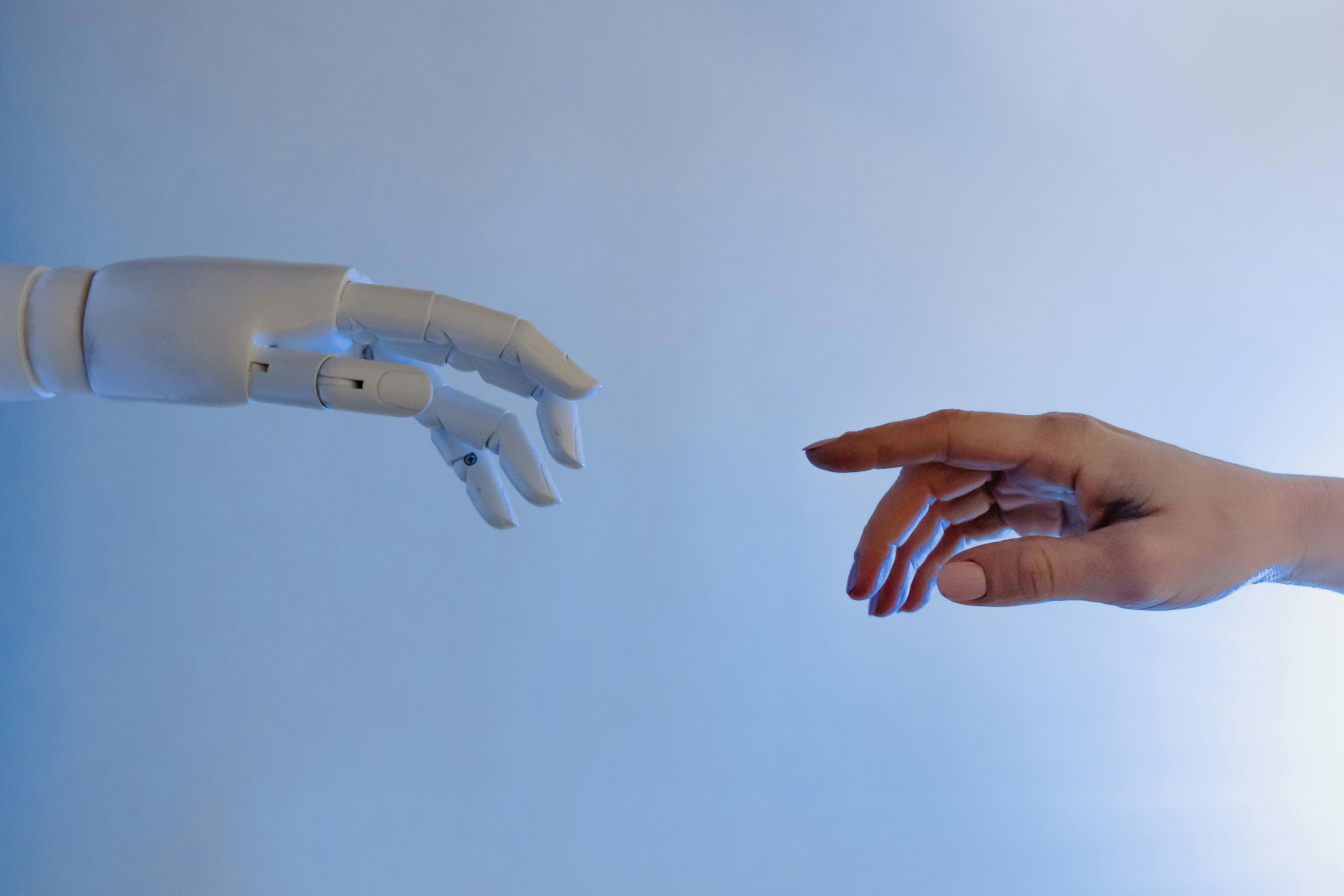
The software becomes a teammate: handling execution, surfacing insights, and asking for input when judgment is required.
A Shift Bigger Than a Feature
AI agents aren’t just another module in a product roadmap. They represent a shift in how we think about interaction design.
We’re moving from systems that wait for instructions to systems that operate alongside us. From dashboards that display data to agents that act on it.
In operational domains like AR and collections — where complexity grows faster than headcount — this shift is especially powerful. It offers a way to scale intelligence, not just process.
For design engineers, that’s both a challenge and an opportunity.
We’re no longer just designing tools.
We’re designing teammates.